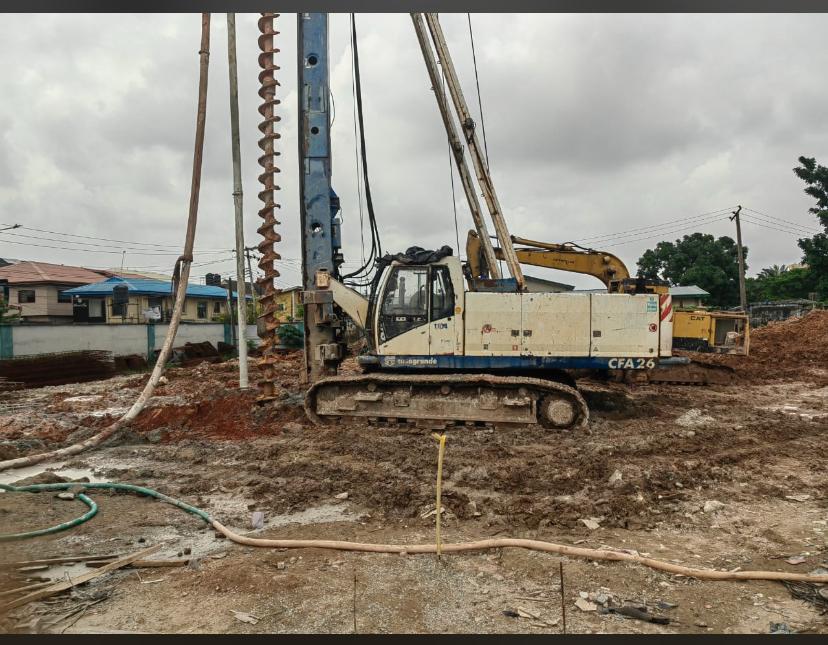
Geotechnical Investigation & Soil Testing
Understand the Ground Before You Build
Reliable construction begins with understanding what lies beneath the site.
GTGABOD provides geotechnical investigation, subsurface exploration and soil testing services designed to establish ground conditions and identify the engineering properties that may influence foundation selection, earthworks and construction.
Our services combine field investigation, soil sampling, laboratory testing and engineering evaluation to provide project teams with reliable information about the ground supporting their development.
Geotechnical Site Investigation
A geotechnical investigation develops an engineering picture of the soil, rock and groundwater conditions beneath a site.
The scope of each investigation is developed around the nature and scale of the proposed project, expected structural loads, site conditions and engineering information required.
Our services can include:
- Site reconnaissance
- Subsurface exploration
- Soil boring and drilling
- Soil sampling
- Standard Penetration Testing
- Groundwater observations
- Laboratory testing
- Soil classification
- Bearing capacity evaluation
- Settlement considerations
- Foundation recommendations
- Compaction recommendations
- Geotechnical reporting
The objective is not simply to identify the type of soil present, but to understand how the ground is likely to behave under construction and structural loading.
Soil Boring & Drilling
Borehole drilling enables GTGABOD to investigate soil conditions below ground level and establish how those conditions change with depth.
Boreholes are advanced to depths appropriate to the proposed structure and investigation requirements.
The process can provide information on:
- Soil stratification
- Thickness of soil layers
- Weak or compressible ground
- Depth to stronger bearing strata
- Groundwater conditions
- Variations in soil properties
- Potential foundation constraints
Samples recovered during drilling can subsequently be examined and tested in the laboratory.
Soil Sampling
Representative soil samples are collected from selected depths during the investigation programme.
Depending on the ground conditions and testing requirements, disturbed or relatively undisturbed samples may be obtained.
These samples provide material for laboratory assessment of the physical and engineering characteristics of the soils encountered beneath the site.
Standard Penetration Testing (SPT)
Standard Penetration Testing can be undertaken within boreholes to measure the resistance of soil to penetration at selected depths.
The results, considered alongside borehole logs and recovered samples, provide useful information about changes in soil condition and can support evaluation of:
- Soil density
- Soil consistency
- Relative strength
- Bearing conditions
- Foundation requirements
- Settlement behaviour
SPT results form part of the wider geotechnical assessment rather than being interpreted in isolation.
Bearing Capacity & Foundation Evaluation
The soils beneath a structure must be capable of supporting the loads transferred through its foundations without unacceptable bearing failure or settlement.
GTGABOD evaluates available field and laboratory information to support assessment of appropriate foundation conditions and allowable bearing pressures.
The assessment may consider:
- Soil stratification
- Soil strength
- Foundation depth
- Groundwater
- Structural loading
- Settlement characteristics
- Variability across the site
The resulting information can assist project engineers in determining whether shallow foundations, raft foundations or deep piled foundations are more appropriate.
Proctor Compaction Testing
Proper soil compaction is important in building platforms, roads, structural fills, embankments and other earthworks.
Proctor Compaction Testing establishes the relationship between soil moisture content and dry density under a specified compactive effort.
Maximum Dry Density (MDD)
The maximum dry density achieved under the specified laboratory compaction procedure.
Optimum Moisture Content (OMC)
The moisture content at which the soil achieves that maximum dry density.
These values provide useful reference parameters for construction compaction requirements and field quality control. Applications include:
- Building platforms
- Structural fill
- Road subgrades
- Embankments
- Backfilling
- Foundation preparation
- Pavement works
- Industrial yards
Laboratory Soil Testing
Depending on the project requirements, laboratory testing may include:
- Natural moisture content
- Particle size distribution
- Sieve analysis
- Atterberg limits
- Specific gravity
- Bulk density
- Dry density
- Compaction testing
- Soil classification
- Shear-strength-related testing
- California Bearing Ratio where applicable
Laboratory results allow the physical and engineering behaviour of recovered soils to be evaluated more accurately.
Geotechnical Evaluation
Collecting soil data is only one part of the investigation.
The information must also be interpreted in relation to the structure and construction works proposed for the site.
Our geotechnical evaluation may address:
- Subsurface soil profile
- Engineering characteristics of encountered soils
- Bearing conditions
- Settlement considerations
- Foundation options
- Recommended founding depths
- Groundwater conditions
- Excavation considerations
- Earthworks
- Fill suitability
- Compaction requirements
- Potential geotechnical risks
Where challenging ground conditions are identified, the findings can help inform the selection of an appropriate GTGABOD piling or foundation solution.
Geotechnical Reports
Investigation findings can be compiled into a structured geotechnical report for use by the project's engineering and construction teams.
Depending on the agreed scope, reports may include:
- Site and project information
- Investigation methodology
- Borehole locations
- Borehole logs
- Soil profile
- Groundwater observations
- Field-test results
- Laboratory-test results
- Soil classification
- Engineering interpretation
- Bearing recommendations
- Settlement considerations
- Foundation recommendations
- Earthwork and compaction recommendations
- Relevant construction considerations
The aim is to provide practical engineering information that can support foundation design and construction planning.
Investigate. Build. Maintain.
From Investigation to Foundation
GTGABOD's geotechnical capability connects directly with our specialist piling and foundation services.
Where an investigation identifies weak or challenging ground conditions, our wider foundation capability allows us to support the next stage of the project with suitable foundation construction solutions.
We investigate what lies beneath the site so better-informed decisions can be made about what is built above it.
Know What You're Building On
Talk to GTGABOD about geotechnical investigation and soil testing for your proposed development.